

Automated payment reminders are system-generated notifications that alert coaching clients about upcoming or overdue payments — removing the need for manual follow-up. Coaches spend an average of 4.2 hours per month on manual invoice creation and payment monitoring. The 2025 International Coaching Federation Technology Survey found that coaches save 11 hours per week by automating administrative workflows including billing. 87% of businesses now expect automated payment follow-up as standard in service transactions.
What are automated payment reminders in coaching?
Automated payment reminders are system-triggered messages sent to clients at defined intervals before, on, or after a payment due date. The system monitors invoice status and fires notifications without any manual input from the coach — that's what separates automated billing communication from an email you write yourself.
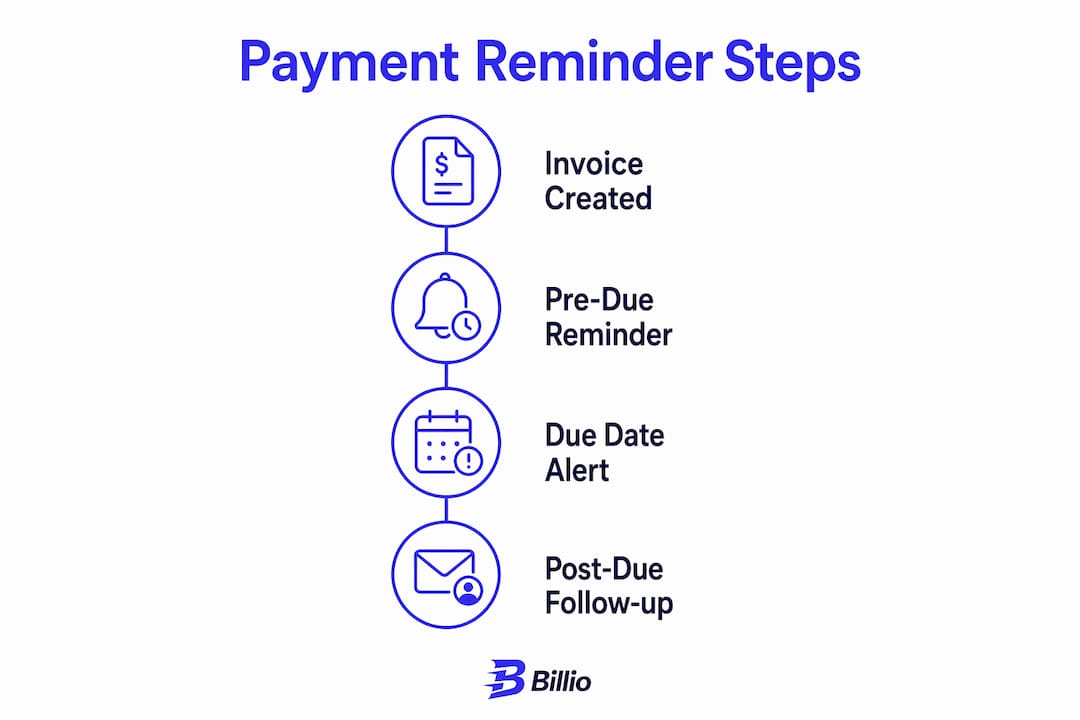
The core workflow has three stages: an invoice is created (manually or automatically when a session is booked), the system tracks the due date, and it sends pre-configured messages based on where the client stands in the payment cycle.

For coaches, this matters because payment conversations are awkward. A system-generated reminder removes the personal tension. The message comes from your business, not from you personally, and clients understand that distinction.
How do automated payment reminders work in a coaching business?
The most effective reminder setup uses three trigger points tied to the invoice due date:
- Pre-due reminder (3 days before): Pre-due reminders have the highest impact on reducing late payments. Most coaches skip this step and focus only on overdue notices. That's a mistake — this single message produces the biggest measurable improvement in on-time payment rates.
- Due-date reminder (day of): A short, clear message confirming the amount due and providing a direct payment link.
- Post-due reminders (7 and 14 days overdue): Escalating in tone, these messages prompt action while staying professional.
The automation connects your payment processor to your invoicing system. When a client books a session, an invoice generates automatically. The system monitors payment status and triggers each reminder based on the schedule you set — no spreadsheet, no manual checking, no awkward phone calls.
Set your pre-due reminder first. Coaches who add a 3-day pre-due notice see the biggest drop in late payments, yet it is the most commonly skipped step in reminder setup.
What are the best practices for crafting effective reminder messages?
The tone of your reminder messages directly affects whether clients pay promptly and whether they feel respected. Reminders framed as supportive operational notices protect client relationships and reduce tension far better than confrontational demands.
Every effective reminder includes four elements:
- Clear amount due: State the exact dollar amount. Never make the client calculate or guess.
- Due date: Include the specific date, not vague language like "soon" or "shortly."
- Direct payment link: One click to pay. Friction kills conversion.
- Your branding: Logo, business name, and consistent visual style signal professionalism.
Consistency matters as much as content. When clients receive reminders that look and sound the same every time, they recognize them as routine business communications. That recognition reduces the emotional weight of the message for both sides.
Write your reminder messages in a neutral, operational tone. Phrases like "Your invoice is ready for payment" outperform "Please remember to pay" because they frame the action as routine, not a request.
How to implement automated payment reminders in your coaching workflow
Setup is fast — most coaches see measurable results within 1–2 weeks of going live. The process follows a clear sequence:
- Connect your payment processor: Link your preferred payment method (credit card, ACH, or direct bank transfer) to your invoicing system. This is the foundation everything else builds on.
- Configure invoice triggers: Decide whether invoices generate automatically on booking or manually after each session. Automatic generation removes one more manual step.
- Set your reminder sequence: Build out your pre-due, due-date, and post-due messages. Define the timing, tone, and content for each.
- Add escalation rules: Specify what happens at 7 days overdue versus 14 days. Some coaches pause new session bookings for clients with outstanding balances — this is a conditional rule that prevents revenue leakage.
- Define payment plan rules: Payment plans must have system-enforced due dates and automated rules for failed payments. Tracking installments in a spreadsheet creates confusion and revenue risk.
- Test before going live: Run a test invoice through the full sequence to confirm timing, message content, and payment links all work correctly.
The most common setup mistake coaches make is treating installment plans casually. Many track installments in spreadsheets, which leads to missed payments, billing disputes, and lost revenue. A proper automation system enforces the plan with defined rules and sends reminders automatically at each installment date.
Automation should also not be treated as a permanent, unchanging setup. Conditional rules and monitoring improve effectiveness over time and prevent revenue leakage. Review your sequences every quarter to check open rates, payment timing, and client feedback.
What measurable benefits do coaches get from automating payment reminders?
Automated pre-due reminders reduce late payments by 30–40%. That single change in timing — sending a reminder before the due date rather than only after — produces the largest measurable improvement in on-time payment rates.
"Coaches who automate billing communication reclaim hours every week and reduce late payments significantly. The data consistently shows that pre-due reminders are the highest-leverage change a coaching business can make to its payment workflow."
| Benefit | What it means for your business |
|---|---|
| 30–40% fewer late payments | More clients pay on time, reducing the need for follow-up |
| 11 hours saved per week | Time returned to coaching, not chasing invoices |
| 4.2 hours/month reclaimed | Manual invoice work eliminated through automation |
| Improved client retention | Professional billing builds trust and reduces friction |
| Reduced revenue leakage | Conditional rules catch failed payments before they disappear |
Coaches who send consistent, branded reminders report stronger client trust and higher renewal rates. When your billing process looks professional, clients take your business seriously — and that perception carries into how they value your coaching services.
Sports coaches and ice skating coaches in particular benefit from centralized billing because their client rosters often include recurring weekly sessions across multiple students. Managing that volume manually is unsustainable. Automation makes it possible to grow without adding administrative overhead.
Why most coaches get payment automation wrong
I've watched coaches set up automated reminders, feel relieved, and then never look at them again. That's the most common mistake in payment automation. The system is not a replacement for judgment — it's a tool that needs periodic review.
The second mistake I see constantly is skipping the pre-due reminder. Coaches assume clients will pay on time without a nudge. The data says otherwise. A 3-day pre-due notice is the single most effective message in the entire sequence, and most coaches don't send one.
The third issue is tone. Coaches worry that automated reminders will feel cold or damage their client relationships. The opposite is true. Clients in 2026 expect professional billing communications. When your reminders are clear, branded, and consistent, they signal that you run a real business. That builds confidence, not distance.
The coaches I've seen succeed with payment automation share one habit: they treat their billing system like a client-facing product. They review the messages, update the language when something isn't working, and check the data on late payments every quarter. Automation handles the repetition. You still need to manage the strategy.
How Billio handles payment reminders for coaches
Billio brings scheduling, invoicing, and automated payment reminders into one platform built specifically for coaches and tutors. You can configure your full reminder sequence — including pre-due, due-date, and post-due messages — without connecting separate tools. The platform handles installment plans with system-enforced rules and automates failed payment follow-up so nothing slips through.
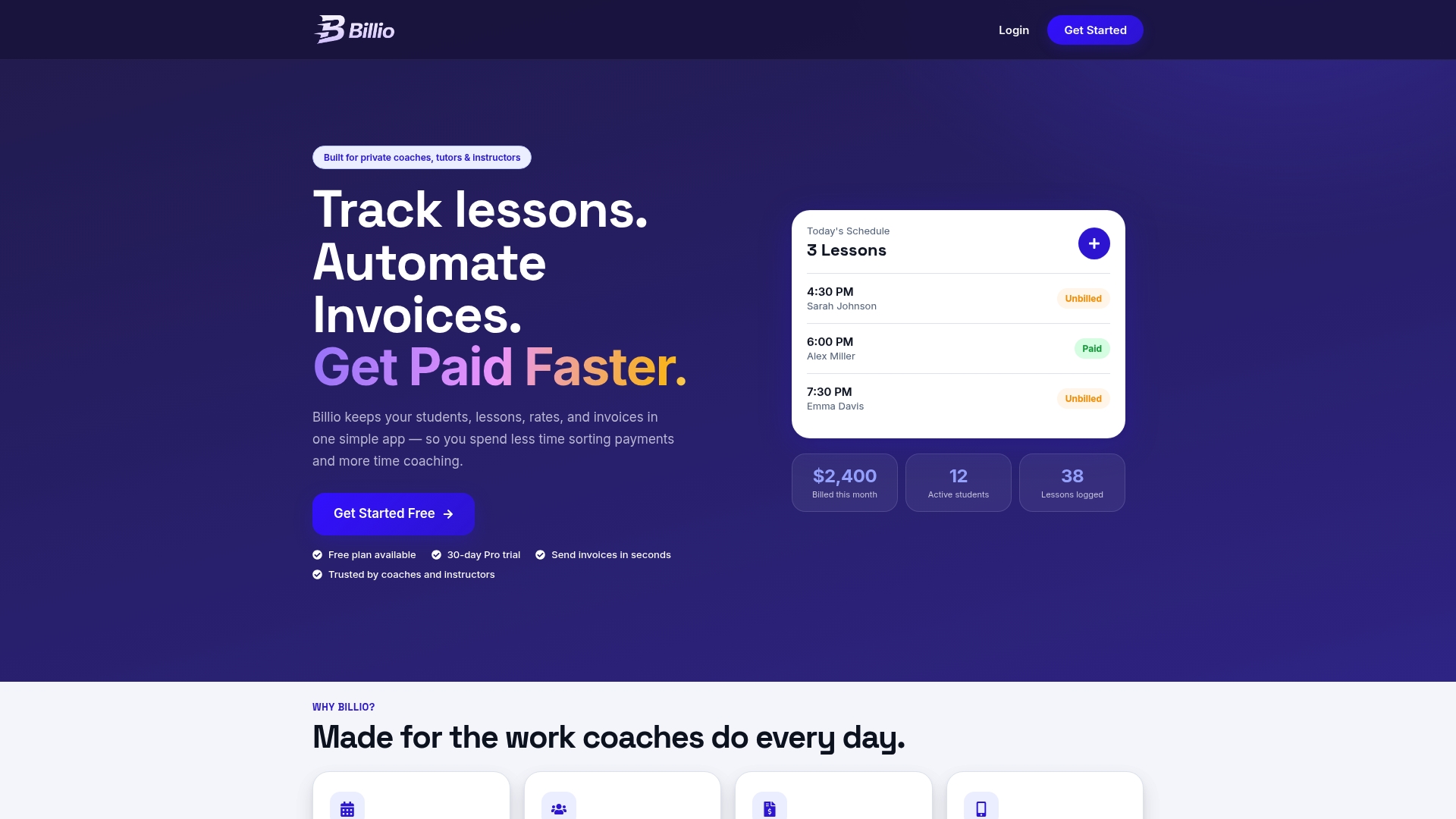
Setup is fast, the interface is built for coaches who want to spend time teaching rather than managing billing software, and the free plan lets you start with up to 5 students before you ever enter a card number. If you're ready to stop chasing payments manually, Billio gives you the tools to get paid on time, every time.
Key takeaways
| Point | Details |
|---|---|
| Pre-due reminders matter most | Sending a reminder 3 days before the due date reduces late payments by 30–40%. |
| Setup is fast | Payment automation typically shows measurable results within 1–2 weeks of going live. |
| Tone protects relationships | Neutral, branded reminders depersonalize payment requests and reduce client tension. |
| Installment plans need system rules | Tracking payment plans in spreadsheets causes errors; automation enforces clarity. |
| Automation requires monitoring | Review reminder sequences quarterly to prevent revenue leakage and maintain effectiveness. |