

Attendance tracking in tutoring is the systematic recording of student presence at each scheduled session, and it forms the backbone of any effective tutoring program. Without reliable attendance data, tutors cannot confirm that instruction is actually reaching students. Research confirms that attendance serves as the operational health check for tutoring programs — the on/off switch that tells you whether sessions are happening at all. When you know who showed up, you can act on that information. When you don't, you're guessing.
What is the role of attendance tracking in tutoring outcomes?
Attendance tracking does more than confirm presence. It generates the data you need to understand whether your tutoring program is working at a fundamental level.

High-impact tutoring produces a measurable effect on school attendance itself. Students scheduled for tutoring three times a week attend 1.3 more school days per 180-day year — tutoring creates a reason for students to show up to school, not just to the tutoring session.
The absenteeism data is even more striking. Scheduled tutoring sessions reduce the likelihood of student absenteeism to 7.0% on tutoring days, compared to 17.2% on days without tutoring — a near 60% reduction. Tutors who track attendance consistently can see this pattern in their own records and use it to make the case for regular scheduling.
"Attendance data is the clearest immediate signal that tutoring is being delivered, enabling district leaders to identify and address implementation gaps in real time." — Pearl Education
Attendance also connects directly to dosage — the total amount of tutoring a student receives over time. Dosage is the metric most closely linked to learning gains. You cannot calculate accurate dosage without reliable attendance records. A student who misses two sessions per month receives significantly less instruction than their schedule suggests, and without tracking, that gap stays invisible.
Tracking attendance alongside behavioral indicators helps explain academic performance trends and guides instructional adjustments. A student whose grades plateau despite strong test prep effort may simply be missing sessions — attendance data surfaces that pattern before it becomes a crisis.
How should tutors set up an effective attendance tracking system?
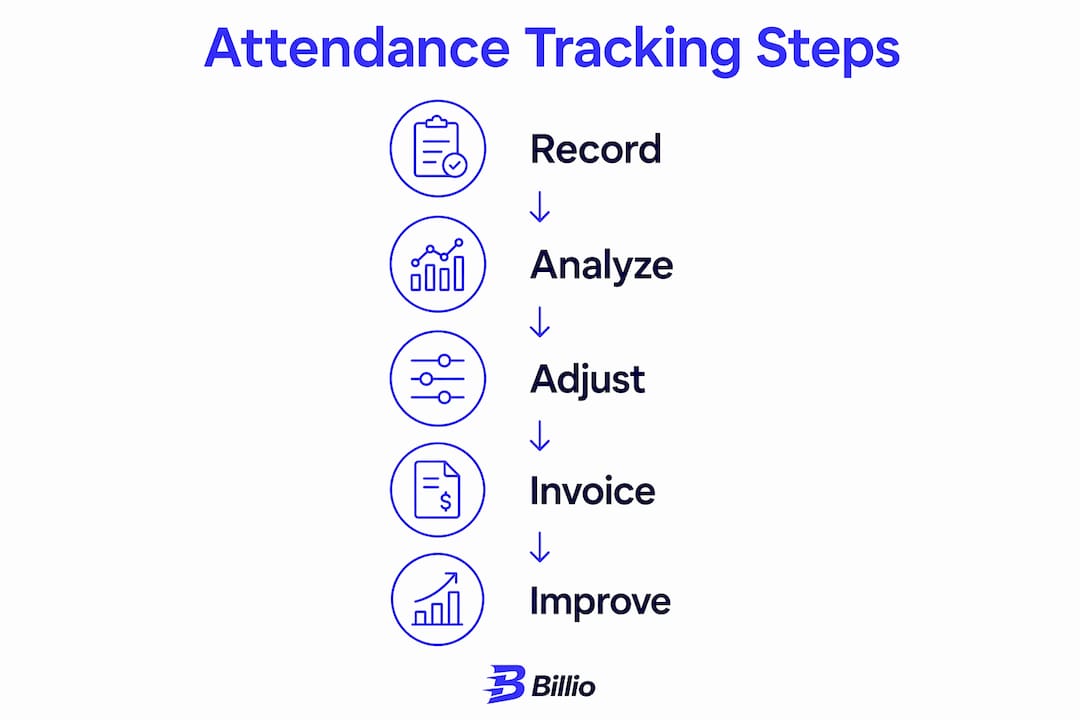
The best attendance tracking system is the one tutors actually use every session. Complexity kills consistency. Effective systems are those that can be updated in under 5 minutes after a session — anything longer gets skipped, which creates gaps in progress monitoring and billing.
| Method | Speed | Accuracy | Scalability | Best for |
|---|---|---|---|---|
| Paper sign-in sheets | Fast per session | Low (easy to lose) | Poor | Solo tutors, occasional use |
| Spreadsheets | Moderate | Medium | Limited | Small rosters, tech-comfortable tutors |
| Dedicated tutoring apps | Fast | High | Strong | Growing practices, multiple students |
| Generic calendar tools | Moderate | Low | Poor | Scheduling only, not recordkeeping |
Paper and spreadsheets work when you have fewer than five students and a very consistent routine. Once your roster grows or you need to share records with parents or administrators, those methods break down fast.
Set a rule for yourself: log attendance before you close your laptop or put away your phone after each session. Waiting until the end of the day means you'll forget details; waiting until the end of the week means you'll skip it entirely.
A few habits make any system more reliable:
- Record attendance immediately after each session, not at the end of the day.
- Note whether the session was in-person, virtual, or rescheduled.
- Flag sessions where a student arrived late or left early — partial attendance affects dosage.
- Review your attendance log weekly to catch any gaps before they compound.
How does attendance data improve tutoring business operations?
Attendance records are not just an educational tool — they are a business asset.
Accurate attendance data makes invoicing straightforward. When you track every session, you know exactly what to bill. Parents and clients rarely dispute invoices backed by a clear session log. For math tutors running multiple weekly sessions, or test prep tutors managing students through a 12-week program, that clarity prevents billing errors and late payment disputes.
Outcomes-based contracting ties vendor compensation to attendance rates and program impact. Districts using this model require tutors to demonstrate attendance fidelity before releasing payment. If you work with schools or educational organizations, your attendance records are the evidence that you delivered what you promised.
Attendance data also protects client relationships. When a parent asks why their child's progress has stalled, you can pull up the attendance log and show exactly how many sessions occurred, when they happened, and whether the student was present. That transparency builds trust and shifts the conversation from blame to problem-solving.
- Prevent billing disputes by providing a clear session-by-session record.
- Support parent communication with factual data on student participation.
- Enable accurate progress reports tied to actual instruction received.
- Demonstrate program fidelity to schools or districts that require accountability.
- Identify students at risk of dropping out due to declining attendance.
What tools and habits help tutors track attendance without the admin burden?
The right tools reduce the time you spend on recordkeeping without reducing the quality of your records. Look for these features when evaluating your options:
- One-tap attendance logging tied directly to the scheduled session, so you don't have to create a new record from scratch.
- Automatic session history that stores attendance alongside session notes and student profiles in one place.
- Invoicing linked to attendance, so a completed session automatically generates a billable record.
- Automated reminders sent to students or parents before sessions, which reduce no-shows and improve attendance rates.
- Mobile access, so you can log attendance from your phone immediately after an in-home or in-library session.
After each session, spend 90 seconds writing two or three notes about what you covered and any concerns about the student's engagement. Attach those notes to the attendance record. Three months later, you'll have a detailed picture of each student's progress that no spreadsheet can replicate.
For music lesson instructors, the role of attendance tracking mirrors what math and test prep tutors need. Recital preparation, technique progression, and practice accountability all depend on knowing how many sessions a student actually completed. The tool requirements are identical: fast logging, session notes, and billing integration.
The tutors who struggle with recordkeeping are usually the ones who treat it as a separate task. The tutors who do it well treat it as the last two minutes of every session.
Why tutors underestimate attendance tracking until it costs them
Many tutors treat attendance as a formality — they know roughly who showed up, they remember the sessions, they'll sort out the billing at the end of the month. That approach works fine until it doesn't.
The tutors who struggle most are the ones who hit 15 or 20 students and suddenly realize their mental model of who attended what is completely unreliable. A parent disputes a charge. A school asks for a session log. A student's progress stalls and nobody can explain why. At that point, reconstructing three months of attendance from memory and calendar notes is a painful exercise.
What actually works is treating attendance logging as a non-negotiable close to every session, not a weekly admin task. The difference in time is maybe two minutes per session. The difference in data quality is enormous. You end up with a record that tells a story: how often a student showed up, how that correlated with their progress, and where the gaps were.
Simple beats sophisticated every time at the start. A tutor who logs attendance in a basic app consistently will outperform one who builds an elaborate spreadsheet system and abandons it after six weeks. Start with whatever you'll actually use, then add features as your practice grows.
Attendance data is not paperwork. It's the foundation you build everything else on — from progress reports to parent conversations to accurate invoices.
How Billio keeps attendance, billing, and scheduling in one place
Billio brings scheduling, attendance logging, student profiles, and automated billing into one platform. You log attendance directly from the session screen, and that record automatically connects to your invoicing — no separate spreadsheet, no end-of-month reconciliation.
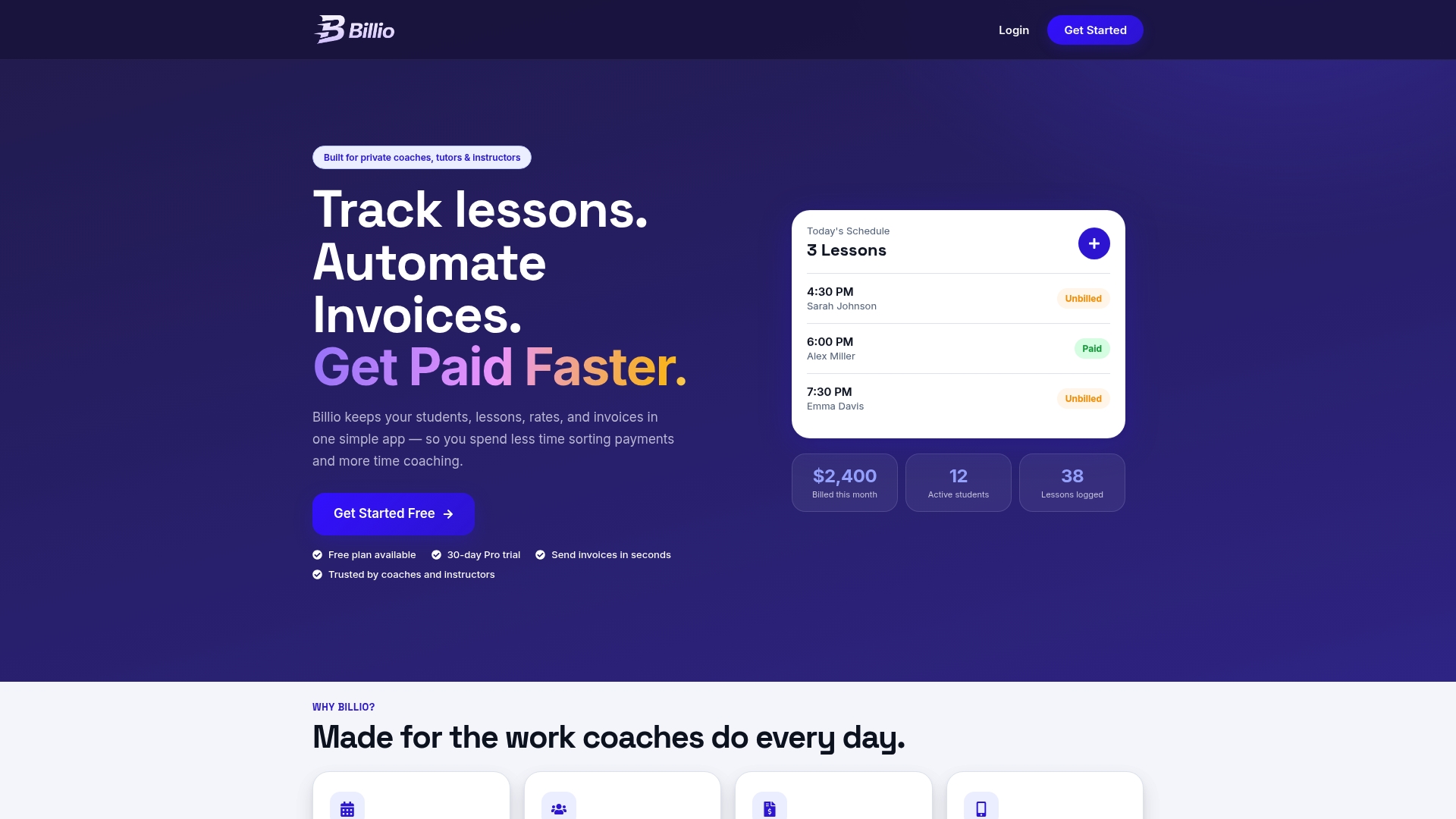
Automated billing and payment reminders mean you get paid on time without chasing anyone. Student profiles store session history, attendance, and notes in one place, so you always have the full picture before a parent call or progress review. You can also review tutoring admin workflow tips to see how other tutors have cut their admin time significantly by centralizing these functions. Whether you teach math, music, or test prep, Billio keeps your practice organized and your focus on teaching. Start free with up to 5 students — no credit card required.
Key takeaways
| Point | Details |
|---|---|
| Attendance confirms delivery | Without session records, you cannot verify that tutoring is actually reaching students. |
| Absenteeism drops on tutoring days | Tutoring days show 7.0% absenteeism vs. 17.2% on non-tutoring days — a near 60% reduction. |
| Keep systems under 5 minutes | Attendance tools that take longer than 5 minutes per session get skipped, creating data gaps. |
| Attendance supports billing accuracy | A clear session log prevents invoice disputes and supports outcomes-based payment contracts. |
| Consolidate your tools | Managing attendance, scheduling, and billing in one place prevents client loss and admin errors. |